How to Maintain Muscle While Losing Weight on GLP-1
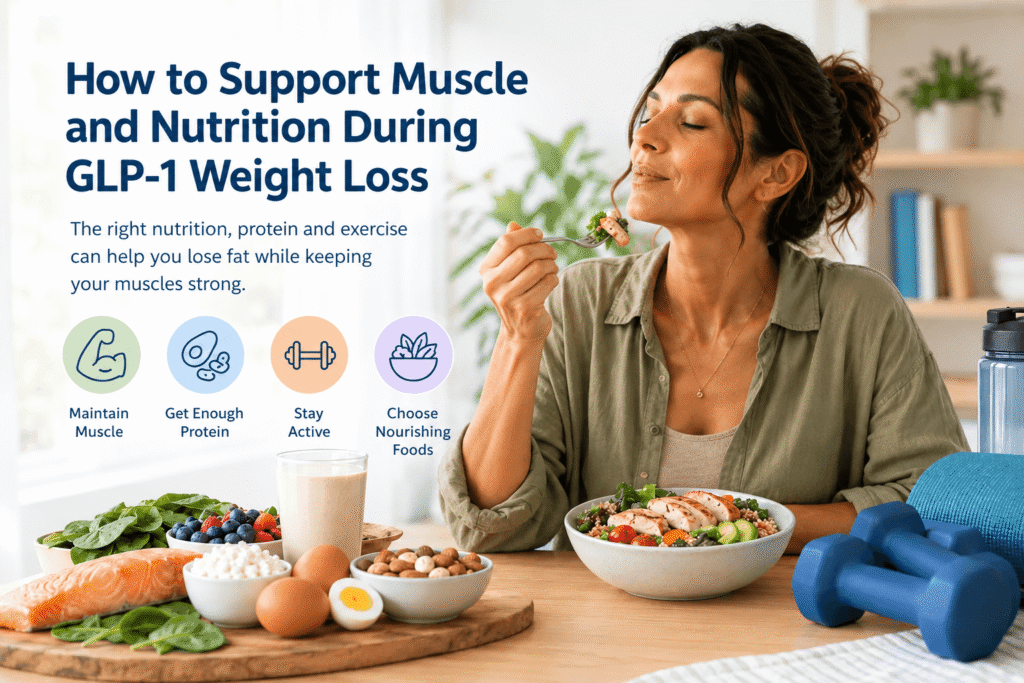
AI Summary
- GLP-1 medicines can reduce appetite, making it harder to eat enough protein.
- GLP-1 nutrition should focus on nutritious foods, adequate protein and overall dietary balance.
- Protein can support muscle maintenance during weight loss.
- Resistance training gives muscles a reason to stay strong while body weight decreases.
- Small, protein-rich meals may be easier to manage when appetite is low.
- Your protein needs should be personalised, especially if you have kidney disease or another condition affecting your diet.
Introduction
Losing weight with GLP-1 medication can make reaching a healthy weight easier, but the goal should not be weight loss alone. Keeping your muscles strong is also important. Because GLP-1 medicines can reduce appetite, some people may eat much less than before and struggle to get enough protein. Good GLP-1 nutrition can help you make the most of smaller meals. Choosing protein-rich foods, staying active and doing strength exercises can support muscle while your body loses fat. The right approach is simple: eat nourishing foods, prioritise protein, listen to your body, and work with your healthcare professional.
Why is muscle important during GLP-1 weight loss?
Muscle helps you move, exercise, perform daily activities and maintain physical strength. During weight loss, the body can lose both fat and lean tissue. GLP-1 treatment does not mean muscle loss is unavoidable, but reduced food intake can make maintaining muscle more challenging.
This is why GLP-1 weight loss nutrition should look beyond the number on the scale. A healthier approach aims to reduce excess fat while supporting muscle, strength, and good nutrition.
How does GLP-1 affect protein intake?
Why can protein be harder to eat on GLP-1?
GLP-1 medicines can reduce hunger and make you feel full sooner. Some people may also experience nausea, changes in food preferences, or other digestive symptoms.
When you eat smaller portions, it can become difficult to get enough protein from your normal meals. This is one reason GLP-1 and protein should be considered together.
Instead of trying to eat very large meals, focus on making the food you do eat more nutritious.
How much protein should you eat on GLP-1?
There is no single protein target that works for everyone. Your ideal protein intake on GLP-1 depends on factors such as your body size, age, activity level, health conditions, and overall diet.
Clinical guidance commonly discusses higher protein intake during active weight loss, but individual needs should be assessed by a qualified healthcare professional or dietitian.
If you have kidney disease or have been advised to limit protein, do not increase your protein intake without professional guidance.
What are the best protein foods on GLP-1?
1. Which foods make protein easier to include?
When appetite is low, choose foods that provide useful nutrition without requiring a very large portion.
Good options can include:
- Eggs
- Greek yoghurt
- Cottage cheese
- Fish
- Chicken or other lean poultry
- Beans and lentils
- Tofu and other plant proteins
- Nuts and seeds
- Milk or other suitable dairy products
Protein-rich foods can be eaten early in a meal when appetite is limited. This may help you get more protein before you become too full.
2. Can protein shakes help with GLP-1?
For some people, a protein shake can be a convenient way to add protein when normal meals feel difficult.
However, supplements should not automatically replace balanced meals. They are better viewed as an option when food alone does not provide enough nutrition. Speak with a healthcare professional or dietitian if you are unsure whether a protein supplement is suitable for you.
How can you maintain muscle while losing weight on GLP-1?
1. Should you do strength training?
Yes, resistance or strength training is an important part of maintaining muscle during weight loss.
Exercises such as squats, resistance-band movements, weight machines, and suitable free-weight exercises give your muscles a reason to remain strong. Research and expert guidance support combining adequate protein with resistance training rather than relying on protein alone.
Start at a level that matches your fitness and health. If you are new to exercise, a qualified professional can help you create a safe programme.
2. Should you still do cardio?
Cardio can be useful for heart health, fitness, and overall activity. Walking, cycling, swimming, and similar activities can all have a place in a balanced GLP-1 diet and lifestyle.
However, cardio should not be the only form of exercise if your goal includes preserving muscle. A combination of aerobic activity and resistance training can provide broader benefits.
What should you eat when you have little appetite on GLP-1?
Small meals can be easier than trying to eat three large portions. Focus on nutrient-dense foods and include a source of protein whenever possible.
For example, a small meal could include Greek yoghurt with fruit, eggs with wholegrain toast, or chicken with vegetables.
If nausea, vomiting, or poor appetite makes eating difficult for an extended period, speak with your healthcare professional rather than forcing yourself to eat.
What does a simple GLP-1 nutrition plan look like?
A practical approach is to build meals around three basic ideas:
- Start with protein: Include a protein source at meals and snacks where practical.
- Add nutritious foods: Include vegetables, fruit, whole grains, and other nutrient-rich foods that you tolerate well.
- Stay active: Combine everyday movement with appropriate resistance training.
The aim is not to create a perfect diet. It is to develop eating and exercise habits that you can maintain while your weight changes.
How can Alveque support your nutrition journey?
Alveque focuses on practical nutrition support for people navigating GLP-1 treatment. If you have questions about protein, nutrition, or how to make smaller meals more nourishing, you can contact the team at [email protected].
Remember that personal nutrition needs can vary. Alveque resources can provide helpful guidance, but your prescriber or qualified dietitian should guide decisions based on your individual health and treatment.
FAQ –
Q. Can I lose muscle while taking GLP-1 medication?
A. Weight loss can include some loss of lean tissue as well as fat. Reduced food and protein intake may increase the challenge of maintaining muscle. Adequate nutrition and resistance training can help support muscle preservation.
Q. Is protein important when taking GLP-1?
A. Yes. Getting enough protein is an important part of nutrition during weight loss because protein supports normal muscle maintenance and repair.
Q. Can I maintain muscle without exercising?
A. Nutrition is important, but protein alone is unlikely to provide the full benefit of resistance training. Strength exercises provide a direct stimulus that helps maintain muscle and function during weight loss.
Q. What should I do if I cannot eat enough protein?
A. Choose smaller, protein-rich portions and consider convenient options such as yoghurt, eggs, fish, or a suitable protein supplement. If poor appetite or digestive symptoms continue, speak with your healthcare professional or dietitian.
Q. Is there one GLP-1 diet that everyone should follow?
A. No. A suitable diet depends on your health, medication, food preferences, activity level, and nutritional needs. A personalised plan is usually more useful than following a rigid GLP-1 diet.